Just How CNC Machining Solutions Boost Performance in Milling and Transforming Procedures
CNC machining services play a pivotal duty in improving efficiency within milling and transforming processes. By utilizing automation and accurate control, these services lessen human mistake and warranty constant result. The capability to manage complex geometries and preserve tight tolerances simplifies production. The full extent of CNC technology's effect goes beyond basic efficiency gains. There are much deeper effects and future patterns that necessitate more expedition.
The Essentials of CNC Machining
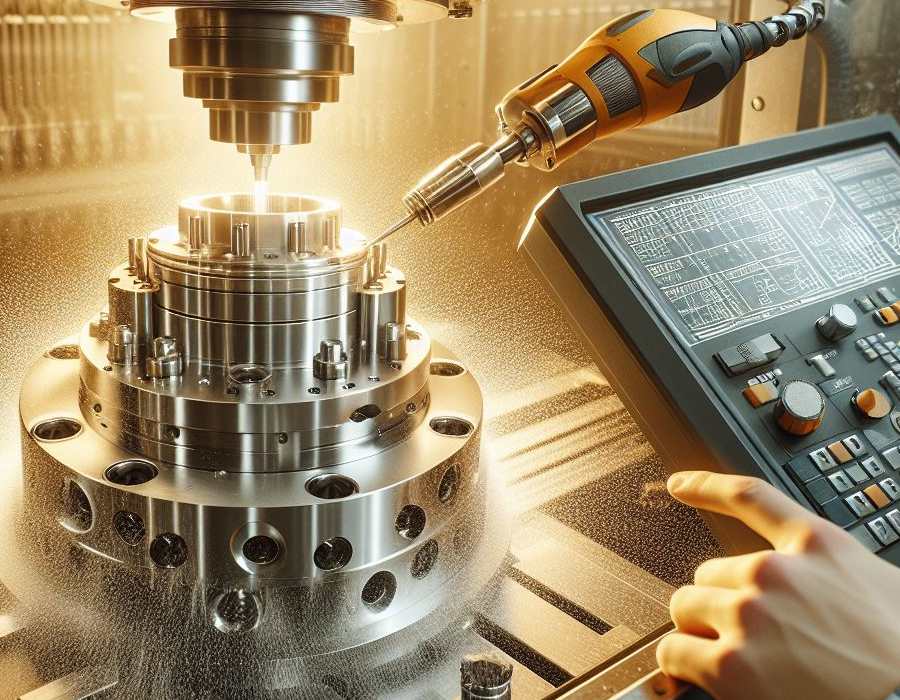
CNC machining is a precise production process that makes use of computer-controlled makers to generate intricate parts and components. This modern technology employs computer-aided design (CAD) software to develop comprehensive models, which are after that converted right into equipment instructions. The procedure normally includes various operations such as milling, turning, and boring, making it possible for suppliers to attain high degrees of precision and repeatability.
CNC makers are furnished with advanced tooling that can manipulate products like plastic, wood, and metal. They run through a collection of commands that dictate motions, speeds, and tool adjustments, minimizing human error and boosting manufacturing performance.
The automation intrinsic in CNC machining permits complex geometries and limited tolerances to be continually created, making it a favored choice in markets requiring precision, such as aerospace and auto. Understanding the basics of CNC machining is necessary for valuing its function in contemporary production processes.
Advantages of CNC Machining in Milling
CNC machining uses significant advantages in milling processes, specifically concerning accuracy and accuracy. This innovation not only improves manufacturing speed but also permits for the production of intricate layouts that would certainly be challenging to achieve by hand. As a result, services can improve performance and increase their capabilities in manufacturing.
Precision and Accuracy
Accomplishing unrivaled precision and accuracy in milling processes is a hallmark of sophisticated machining techniques. CNC machining services use computer-controlled systems that carefully implement styles with very little human intervention. This automation ensures that each cut and contour is performed to exact specifications, substantially reducing the danger of mistakes typically connected with hands-on milling. The ability to generate elaborate geometries with limited resistances is an essential advantage, permitting producers to fulfill rigid high quality needs. Furthermore, CNC equipments can preserve consistent efficiency throughout multiple runs, ensuring harmony in production. This degree of accuracy not only boosts item quality but also decreases material waste, resulting in more efficient use of sources. In general, CNC machining solutions transform milling procedures via their commitment to precision and detail.
Enhanced Production Rate
Accelerating production speed is just one of the standout advantages of modern-day machining services. CNC machining significantly reduces the moment required for milling processes by automating procedures and reducing manual intervention. Makers can run constantly, permitting for enhanced result without giving up high quality. The capacity to program multiple tasks right into a solitary setup additionally improves production, enabling suppliers to total complicated tasks in less time. In addition, CNC devices maintain high-speed reducing capacities, causing quicker material elimination and faster cycle times. This boosted effectiveness translates to shorter preparations, allowing firms to respond swiftly to market demands. On the whole, enhanced production rate with CNC machining not only improves efficiency but additionally enhances competitive benefit in the production market.
Facility Layout Capacities
The capacity to develop elaborate layouts is a substantial advantage of modern machining services. CNC machining permits the manufacturing of intricate geometries that would be challenging, if not impossible, to achieve utilizing conventional methods. This capacity comes from advanced shows and automated devices that precisely adhere to digital plans, making sure precision and repeatability. As an outcome, suppliers can generate detailed parts with limited resistances, enhancing performance in different applications. Furthermore, the versatility of CNC devices enables fast adjustments to create specifications without comprehensive retooling, improving the production process. This versatility not only boosts creativity in design yet also permits reliable trial and error and development, offering organizations an one-upmanship in the ever-evolving market.

Benefits of CNC Turning Procedures
CNC transforming procedures use significant advantages in manufacturing, particularly relating to precision and precision. These procedures permit the development of extremely detailed components with very little tolerances, making sure high quality in manufacturing. Furthermore, the efficiency of CNC turning adds to reduced lead times, allowing quicker shipment of completed items.
Precision and Accuracy
Precision and accuracy are characteristic features of CNC turning processes, setting them apart in the manufacturing landscape. These processes utilize computer numerical control to assist reducing devices with unparalleled exactness. This causes components that fulfill rigorous specifications and tolerances, lowering the probability of errors. CNC transforming permits repeatable and regular manufacturing, guaranteeing that each part is virtually the same, which is crucial in markets needing high standards, such as aerospace and clinical tools - cnc turning service. In addition, advanced software and modern technology make it possible for real-time modifications throughout machining, enhancing total top quality. By minimizing human error and optimizing control over the production process, CNC transforming link services supply premium accuracy and precision, making them a necessary option for contemporary production requirements
Decreased Lead Times
Lowered preparations are a substantial benefit of CNC transforming procedures, coming from their capacity to maximize and automate manufacturing. CNC transforming devices operate with high performance, enabling for quick arrangement and implementation of numerous jobs without the requirement for substantial hand-operated intervention. This automation minimizes downtime and accelerates the production process, allowing quicker turnaround for orders. In addition, CNC technology improves uniformity and lowers mistakes, which even more contributes to faster production cycles. As an outcome, businesses can satisfy tight target dates and react promptly to market demands. By leveraging CNC transforming procedures, companies can improve operations, boost resource allotment, and inevitably improve their one-upmanship via decreased preparations.
Precision and Accuracy in Production
While making procedures have actually evolved substantially for many years, the value of precision and precision continues to be paramount. In CNC machining, these two elements are critical to producing top notch components that fulfill specific specifications. The assimilation of innovative computer technology permits thorough control over machining specifications, making certain that click for more info parts are crafted with very little inconsistency from designated styles.
Precision in producing refers to the repeatability of procedures, while accuracy signifies exactly how carefully a finished component lines up with its designated measurements. CNC machines make use of advanced software application and devices that allow suppliers to attain both, visibly reducing the margin for mistake - fast prototyping. This capacity is specifically necessary in markets such as aerospace, vehicle, and clinical, where also small errors can cause devastating failures
Minimizing Lead Times With CNC Modern Technology
CNC technology accelerates production timelines by improving the machining process. By automating jobs, CNC devices decrease manual treatment, greatly minimizing the time needed for setup and operation. This efficiency makes it possible for suppliers to react swiftly to market demands, meeting orders much faster than traditional machining approaches enable.
Additionally, CNC technology offers quick prototyping abilities, permitting fast iterations and changes based on client feedback. The accuracy of CNC machining ensures that components are produced appropriately the very first time, reducing the possibility of costly mistakes and rework.
Progressed organizing and programming capabilities optimize process, permitting several operations to run concurrently. This integration of modern technology not only reduces lead times however page also enhances overall productivity. Inevitably, the fostering of CNC machining services equips producers with the tools required to satisfy limited deadlines while maintaining high-quality criteria in production.
The Future of CNC Machining in Sector
As manufacturers significantly adopt CNC modern technology to simplify procedures and decrease preparations, the future of CNC machining in market appears promising. Developments such as fabricated knowledge and machine knowing are set to transform the abilities of CNC devices, enhancing their precision and versatility. These developments will help with real-time monitoring and anticipating upkeep, decreasing downtime and optimizing manufacturing efficiency.
Moreover, the integration of Web of Things (IoT) modern technologies will certainly make it possible for much better data collection and analysis, enabling manufacturers to make educated decisions that additionally improve functional effectiveness. The rise of additive production together with CNC machining is anticipated to complement standard approaches, giving higher design versatility and material performance.
In addition, as sustainability comes to be a priority, CNC machining is advancing to integrate eco-friendly methods, which will attract eco mindful consumers. In general, the future of CNC machining is characterized by constant technology and adjustment, positioning it as a foundation of modern-day manufacturing.
Regularly Asked Questions
What Products Work With CNC Machining Solutions?
CNC machining solutions are compatible with numerous products, including metals like steel, titanium, and light weight aluminum, in addition to plastics such as acrylic and polycarbonate. Wood and compounds additionally suit CNC processes for varied applications.
Exactly How Does CNC Machining Contrast to Standard Machining Approaches?
CNC machining offers higher automation, uniformity, and accuracy contrasted to conventional approaches. It decreases human mistake, increases manufacturing rate, and enables for intricate styles, making it a superior option in modern-day manufacturing environments.
What Industries Advantage the Many From CNC Machining Solutions?
The aerospace, vehicle, medical, and electronic devices industries profit significantly from CNC machining services. These fields take advantage of personalization, precision, and speed to improve item high quality while reducing production costs and time, eventually improving general functional effectiveness.
Can CNC Machines Handle Complex Geometries and Styles?
CNC equipments are adept at managing intricate geometries and designs, permitting accuracy and elaborate outlining. Their sophisticated programs capacities enable producers to create elements with high accuracy, conference varied sector demands and boosting item performance.
What Is the Normal Price Array for CNC Machining Solutions?
The regular expense variety for CNC machining solutions differs extensively, usually falling in between $50 to $150 per hour, relying on variables such as product, intricacy, volume, and the specific machining procedures utilized.
CNC machining is an exact production process that uses computer-controlled devices to produce detailed components and elements. CNC machining uses significant advantages in milling processes, specifically pertaining to accuracy and precision. CNC machining substantially minimizes the time required for crushing procedures by automating operations and reducing manual treatment. CNC innovation speeds up manufacturing timelines by enhancing the machining procedure. As suppliers progressively take on CNC modern technology to streamline procedures and lower lead times, the future of CNC machining in sector shows up encouraging.